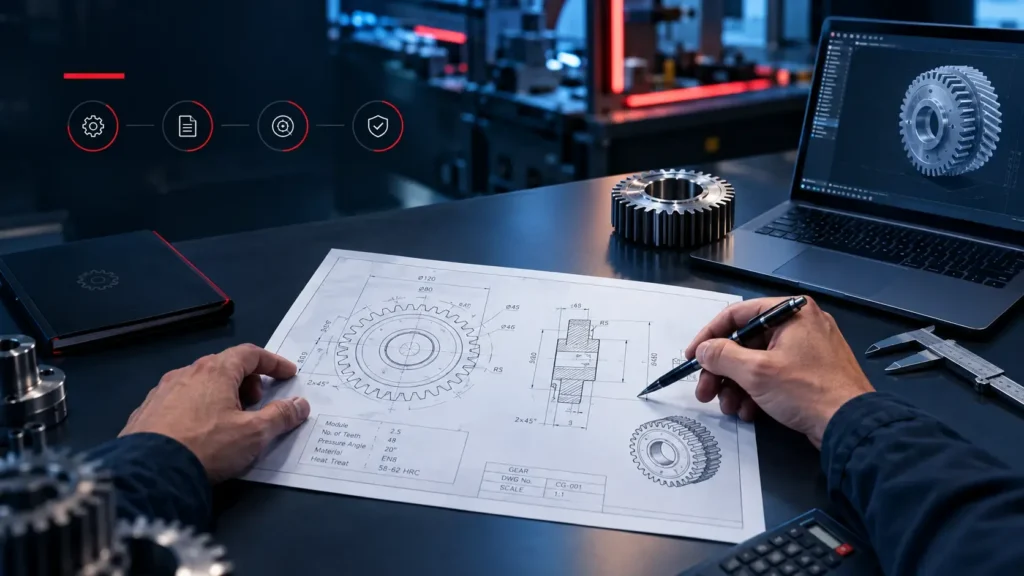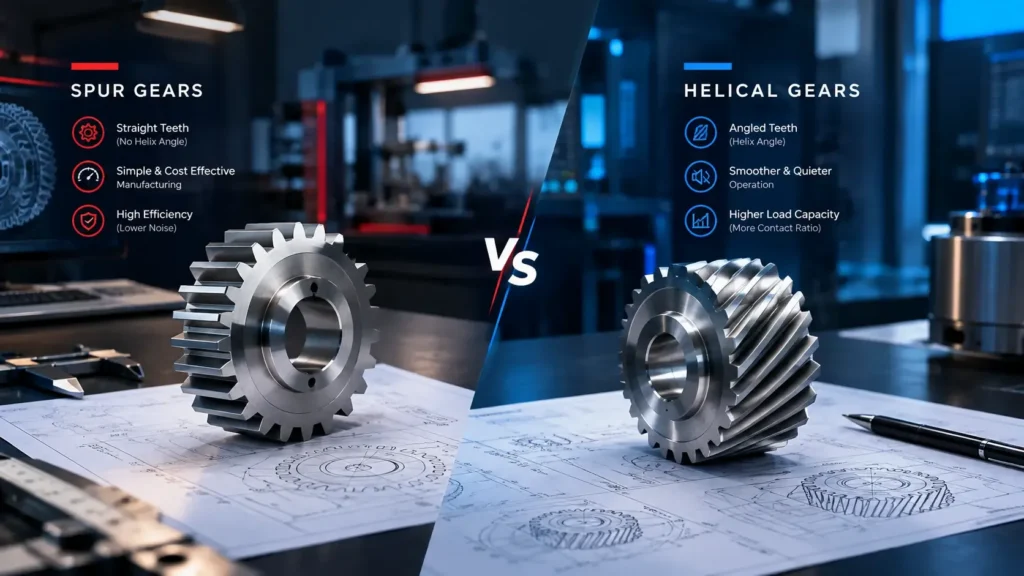
When people say a gear is “high quality,” they usually mean it’s accurate. The gear industry puts numbers to that accuracy through AGMA quality classes — a way of describing how closely a gear’s real tooth geometry matches the ideal.
What the class describes
An AGMA class rolls up several tooth-geometry tolerances — things like profile deviation, lead (or helix) error, pitch variation and runout. A higher class number means tighter tolerances on all of those. It’s a shorthand for how precise the gear is, measured against a standard the whole industry recognizes.
Higher isn’t automatically better
It’s tempting to specify the tightest class available, but precision has a cost. A conveyor sprocket turning slowly under load doesn’t need the same accuracy as a gear in a precision instrument, and paying for it is money spent on tolerance the application will never use. The right class is the one that matches the job — no looser, no tighter.
- Higher class = tighter geometry tolerances
- Precision costs time and money — match it to the function
- Under-specifying can cause noise, wear or premature failure
- When in doubt, describe what the gear does and let the shop advise
How we verify it
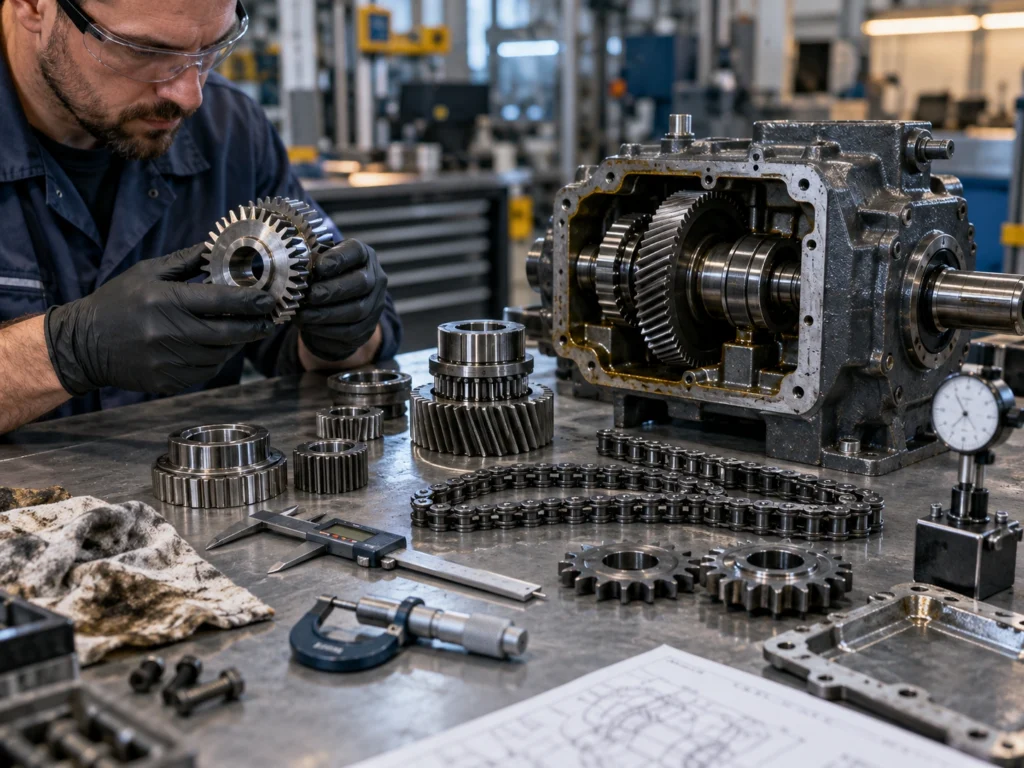
Whatever class your part calls for, it has to be measured, not assumed. Our quality program is based on the AGMA Inspection Manual 2000-A88, and we inspect profile, lead and composite error on calibrated ITW, Fellows, Gleason and Brown & Sharpe instruments. That’s how we confirm a gear meets the drawing before it ships.
Not sure what class your application needs? Tell us what the gear does and we’ll help you specify it — see our quality inspection capabilities.